Operator strengths
- Smartest in the room
- Win every argument
- Strong opinions, fast decisions
- Take ownership
- 'Add value' to every conversation
People
by Marshall Goldsmith
Source book · ~5h read
Pairing
What Got You There Won't Get You There is paired with the People stage — who builds it with you determines whether it gets built at all.
Working draft
This summary is an early draft, still being checked for accuracy against the source. Treat it as a work in progress — not a verified reference — until this notice is removed.
The argument
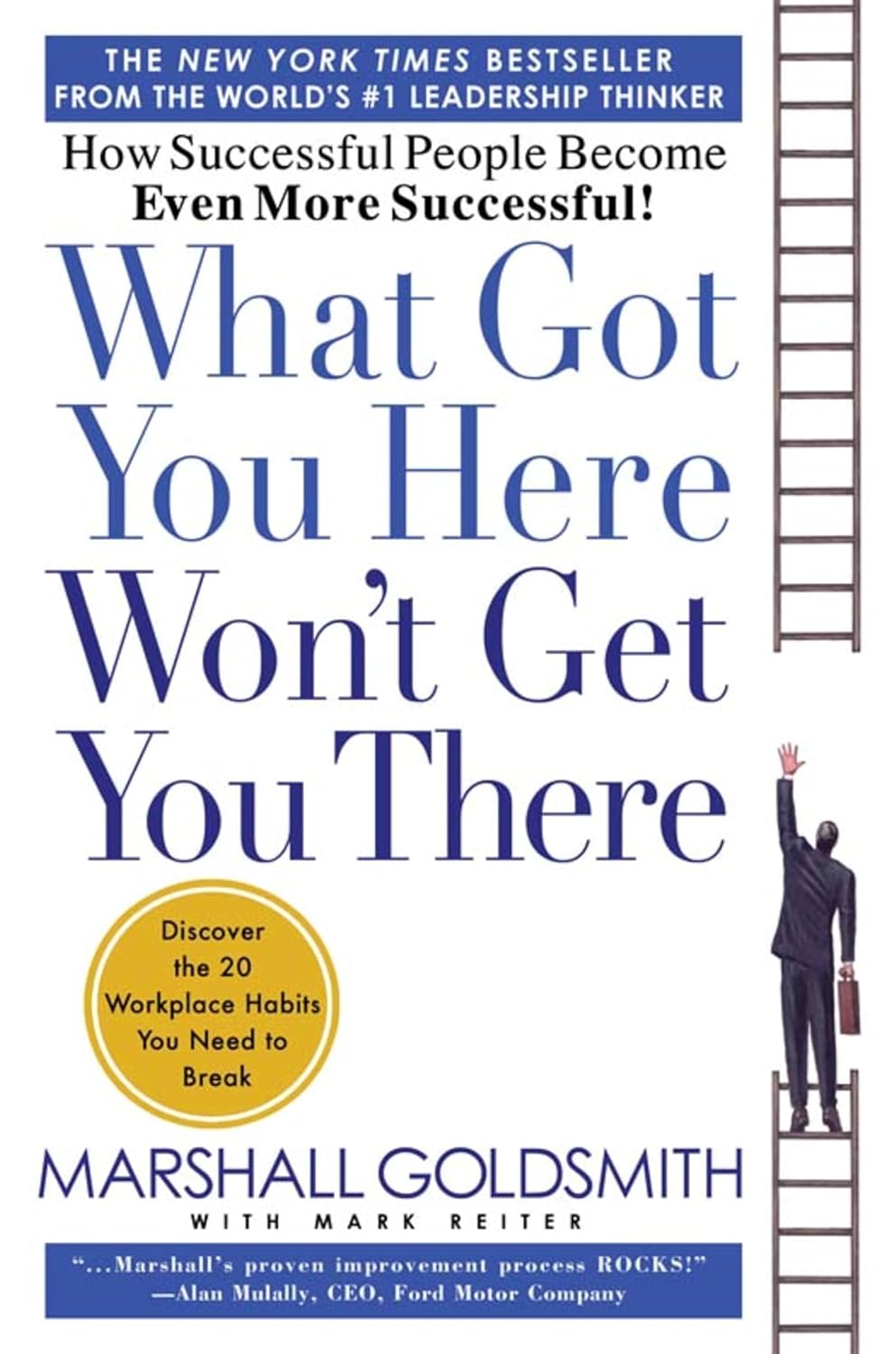
Marshall Goldsmith, an executive coach to senior leaders, argues that the strengths that make people successful early in their careers often become the obstacles to higher levels of success. Behavioral patterns that worked in operator roles — being the smartest in the room, winning arguments, taking credit — actively harm leaders. The book identifies 20 'transactional flaws' that Goldsmith sees in his clients and provides a behavioral-change methodology centered on feedback, follow-up, and humility.
At a glance
The hook
The strengths that got you here are now what's holding you back.
First-time founders succeed in operator mode: be the smartest, win arguments, ship faster, take ownership. At some point — usually around the fifth or tenth hire — the operator habits become organizational liabilities. Winning every argument trains your team not to disagree. Being the smartest in the room trains them to wait for you. Taking credit teaches them not to bring you successes.
Goldsmith's contribution is naming this transition and providing the behavioral-change framework. The book's value isn't the 20 flaws (most leaders only have 2–3); it's the rigorous methodology for changing behavior at scale: get specific feedback, declare the change publicly, follow up monthly, measure progress through perceptions of others — not your own.
For first-time founders, this is preventive medicine. The transition from operator to leader is one of the highest-mortality moments in a founding journey — and most founders don't realize they're failing it until senior people start leaving.
5 takeaways
01 / 05 — Strengths become weaknesses
Use ← → keys, or swipe on mobile
Pick 5–7 people who work closely with you: co-founders, direct reports, key collaborators. People who see your daily operating pattern.
Send each of them this exact question: *'In your honest view, what's one behavior of mine that, if I changed it, would make me more effective as a leader / co-founder for this team?'*
Three rules:
Anonymous responses if needed — use a Google Form to remove fear.
No follow-up arguing — when responses come back, your only job is thank you. Not 'but here's why I do that.'
Pick the most-mentioned theme — not the most flattering interpretation; the most-mentioned.
Now publicly commit to changing it. Tell the 5–7 people: 'I heard the feedback. I'm working on X. I'd like you to call me out when you see it, monthly.'
Set a calendar reminder for monthly follow-up. Ask each of them: 'Have I improved on X? What should I do differently next month?'
By month 3, the people around you will see the change — and will trust the next change you commit to making. Goldsmith's methodology in 30 minutes a month.
Read
Share