System 1
- Fast, automatic, confident
- Recognizes patterns instantly
- Makes most daily decisions
- Cheap, low effort
- Riddled with biases (invisibly)
Persistence · also: Prove
by Daniel Kahneman
Source book · ~8h read
Pairing
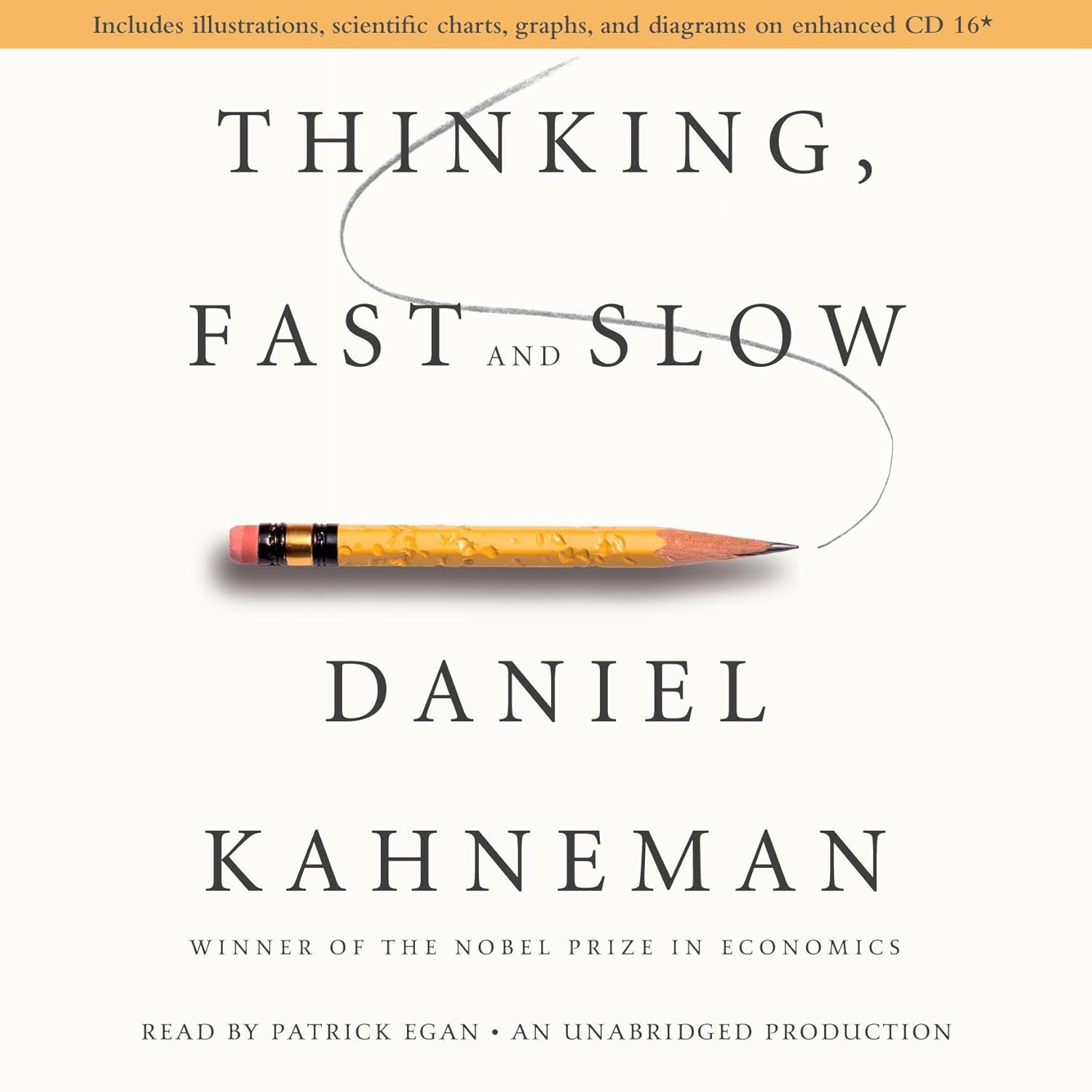
Thinking, Fast and Slow is paired with the Persistence stage — the one who lasts beats the best. It also speaks to Prove.
Working draft
This summary is an early draft, still being checked for accuracy against the source. Treat it as a work in progress — not a verified reference — until this notice is removed.
The argument
Daniel Kahneman, distilling decades of research with Amos Tversky, argues that the human mind has two systems: System 1 is fast, intuitive, automatic, and confident — the system you use to recognize faces, drive familiar roads, form first impressions. System 2 is slow, deliberate, effortful, and reluctant — the system you use to do hard math, evaluate arguments, override gut reactions. System 1 handles most of daily life by default; System 2 engages only with deliberate effort. The trouble: System 1 is full of biases that look like clear thinking from the inside.
At a glance
The hook
Your gut is fast, confident, and often wrong. The discipline is knowing which decisions deserve System 2.
First-time founders make decisions all day. Most of them are made by System 1 — the fast, gut, confident system — without realizing it. Anchoring on the first number you saw. Confirmation bias on the customer feedback that confirms your hypothesis. Sunk-cost fallacy keeping the wrong feature alive. Availability heuristic giving last week's loud customer too much weight.
Kahneman's contribution isn't 'be more rational' — that doesn't work; System 2 is too lazy. The contribution is naming the biases so you can recognize when one is happening, and learning to reach for System 2 only on the decisions that justify the cost. Not every decision needs slow thinking. The ones that do, most founders make fast. The discipline is knowing which is which.
5 takeaways
01 / 05 — System 1 vs System 2
Use ← → keys, or swipe on mobile
Before your next significant decision — a hire, a raise, a feature commitment, a new market — run a pre-mortem. Not a normal risk analysis. A pre-mortem is fiction.
Imagine it's exactly one year from today. The decision was a catastrophic failure. Write the obituary. What went wrong? Why did it fail? Who saw it coming? What signals were ignored?
Write it for 10 minutes uninterrupted. Then read what you wrote.
The reasons your future-self lists are usually the System-1 risks your present-self is dismissing right now. Anchoring you to the original valuation. Confirmation bias on the early customers who said yes. Loss aversion keeping a hire you should have ended. The pre-mortem makes those visible.
Then — and only then — make the decision. Often you'll proceed anyway. But you'll proceed with the System-2 risks named, not buried.
Read
Share