Plan-and-execute
- Detailed roadmap, six-week milestones
- Build features first, learn later
- Success = shipped on time
- Pivot feels like failure
- Metric: features shipped
Prove
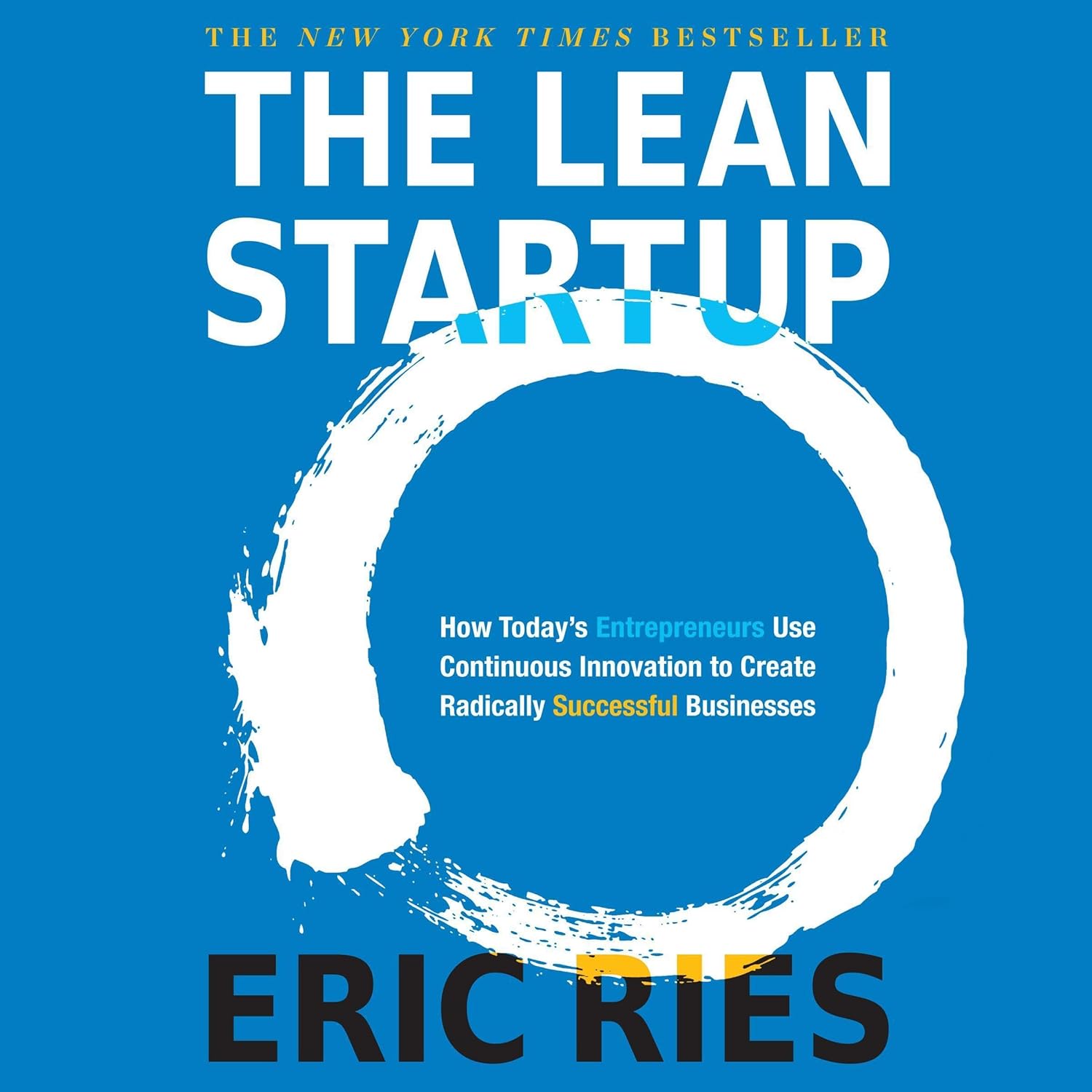
by Eric Ries
Source book · ~5h read
Pairing
The Lean Startup is paired with the Prove stage — the market is the only judge that matters.
Working draft
This summary is an early draft, still being checked for accuracy against the source. Treat it as a work in progress — not a verified reference — until this notice is removed.
The argument
Eric Ries argues that a startup is not a smaller version of a real company — it's an experiment under conditions of extreme uncertainty. The right unit of progress is not features shipped or revenue earned but validated learning: each cycle, did your hypotheses about customer, problem, and solution become more or less likely to be true? Build → Measure → Learn replaces plan-and-execute. The MVP isn't a smaller product; it's the smallest experiment that produces a falsifiable answer.
At a glance
The hook
Most first-time founders fail not by building too little — but by building too long, the wrong thing.
Lean Startup's gift to first-time founders is permission to fail faster. You don't need a finished product before you talk to customers. You don't need a perfect plan. You need a hypothesis you can falsify within two weeks. The discipline isn't about lowering quality — it's about lowering waste. Every feature you build before validation is potentially a tax on the runway you don't have.
The pivot-or-persevere frame is the second gift: every cycle ends with a real decision, not a vague 'keep going' default. Validated learning is the only scoreboard that matters until product-market fit. For Phase 1 founders specifically — still building toward a launch — Ries recalibrates the question from can we build this? to should we build this, and what's the smallest test that tells us?
5 takeaways
01 / 05 — Validated learning
Use ← → keys, or swipe on mobile
Pick the single assumption that, if wrong, would kill your business. Not 'people might not buy it' — too broad. Try: 'B2B buyers will pay $50/month for an X tool that does Y, and we can reach five of them via cold LinkedIn this month.'
Now design the smallest experiment that would falsify it within two weeks. A landing page. Ten customer conversations with one specific question. A fake-door feature on your existing site. A hand-rolled prototype delivered manually.
Constraint: the experiment must produce a clear yes/no answer, not 'interesting feedback.' Set a calendar deadline. Run it. Decide pivot or persevere based on what the experiment actually told you — not what you wanted it to tell you.
Read
Share