7P Framework
← Stories
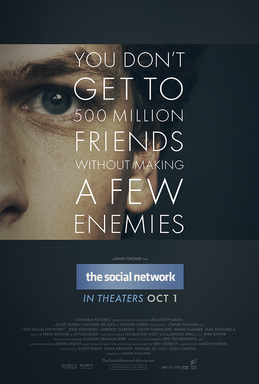
Poster for The Social Network (2010)

People

The Social Network

Directed by David Fincher · written by Aaron Sorkin

Film · 2010 · 2h 1m

Starring Jesse Eisenberg, Andrew Garfield, Justin Timberlake.

Find streaming options ↗

I was your only friend. You had one friend.
Eduardo Saverin to Mark Zuckerberg, The Social Network (2010)

Pairing

Why this story, in this stage

The Social Network is paired with the People stage — who builds it with you determines whether it gets built at all. A mixed lesson.

The argument

Central thesis

The Social Network is the canonical co-founder failure narrative — a film about how what looks like success and what is actually the right outcome can diverge so far that the founder ends up alone, even at the apex. The film is structured as two depositions; everything else is flashback. Eduardo's dilution from a meaningful early stake to almost nothing (the actual settlement is murkier; the film treats it as the moral wound) becomes the metaphor for every co-founder split that happens because the early agreements weren't built to survive the company's growth.

The film opens with Erica diagnosing Mark in a single sentence — "that won't be true. It'll be because you're an asshole" — and then spends two hours proving her right. Mark builds a billion-dollar company. He ends the film alone, refreshing Erica's Facebook profile, hoping she'll accept his friend request. Sorkin's argument isn't that Mark was evil; it's that the things he optimized for and the things he lost were causally linked. The genius and the cost weren't separable.

For founders, the lesson is in the equity, the documents, the friendships, the trust — and how they all interact. PRIME exists because of stories like this one.

The hook

The founder lesson

Every co-founder failure looks reasonable from the inside, in the moment, while it's happening.

Three specific founder lessons.

First, good faith without explicit alignment destroys partnerships. Eduardo isn't naive — he funds the company, he handles the business side, he's loyal. Mark isn't villainous — he's building. Sean Parker isn't lying — he sees the future faster than Eduardo does. And the result is still that Eduardo gets cut. The lesson isn't about who's right; it's that good intentions are not protection. Every PRIME conversation Eduardo and Mark didn't have shows up later as a deposition.

Second, the signing scene. The moment Eduardo signs the papers Sean Parker hands him without reading them — that's the founder lesson rendered in a single shot. Never sign what you haven't read; never assume your co-founder's lawyer is your lawyer. Eduardo trusts Mark. The trust is misplaced not because Mark is malicious but because Mark's attention is on the building, and the building has its own gravity that pulls equity toward the builder.

Third, the closing image. Mark at his computer, refreshing Erica's profile, hoping she accepts his friend request. Won everything. Won nothing. The founder lesson here is the cost: when the price of building is every relationship that started the build, the founder discovers — too late — that the relationships were the building, and the company was the byproduct.

5 takeaways

What to remember

  • The opening — Erica's diagnosis

    "That won't be true. It'll be because you're an asshole." The film never lets Mark escape this sentence. Founder analog: the people closest to you see the pattern before you do — and what they say in the bar at the start is usually the verdict at the end.

  • The signing — Eduardo's most expensive paragraph

    Eduardo signs the dilution papers without reading them. Founder analog: never sign what you haven't read; never assume your co-founder's lawyer is your lawyer. Get your own counsel for every round. The cost of paranoia is small. The cost of trust mis-placed is everything.

  • The dilution

    Equity rounds without explicit pre-alignment become weapons. *Founder analog: walk through every scenario — dilution, replacement, exit, a third co-founder — before it happens.* The conversations you can have before the company is real are the conversations you can still have honestly.

  • Sean Parker — useful AND dangerous

    The operator who sees the future faster than the founder. *Founder analog: every founder needs at least one Sean — someone who sees around corners — and the discipline to stay in the room with them rather than swept by them.* The danger is treating their pace as truth. Sometimes it is. Sometimes it isn't.

  • The empty office

    Mark refreshing Erica's profile at the end. Won everything. Won nothing. *Founder analog: the relationships that started the build often are the build. The company was the byproduct. Build the relationships first; the company you build with people who stay is the company that lasts.*

Practice CardOne-screen exercise

Have the Eduardo conversation now.

If you have a co-founder, take ninety minutes this week. Walk through every scenario in which one of you would feel betrayed: dilution, replacement, departure, exit, a third co-founder, a major round, a fight that ends a friendship.

*For each scenario, write down what fair looks like — before any of it has happened.* Sign it together. Re-read every six months.

The discipline isn't legal protection; it's converting good faith into explicit alignment, which is the only kind that survives. Run the PRIME compass alongside this exercise — they reinforce each other.

If you don't have a co-founder yet but plan to, do this exercise with the candidate before you commit. The conversations you have before the company is real are the conversations you can still have honestly.

Share with a founder who's deciding whether to keep going.