7P Framework
← Stories
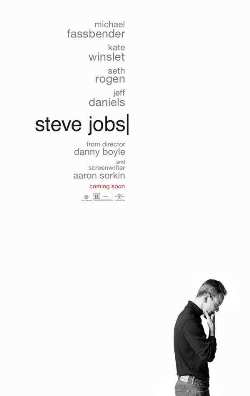
Poster for Steve Jobs (2015)

Product · also: People

Steve Jobs

Directed by Danny Boyle · written by Aaron Sorkin

Film · 2015 · 2h 2m

Starring Michael Fassbender, Kate Winslet, Seth Rogen, Jeff Daniels.

Find streaming options ↗

It's not binary. You can be decent and gifted at the same time.
Steve Wozniak (Seth Rogen), Steve Jobs (2015)

Pairing

Why this story, in this stage

Steve Jobs is paired with the Product stage — build the right thing first; then build it right. A cautionary tale. It also speaks to People.

The argument

Central thesis

Sorkin's structure — three acts, each a product launch, each a backstage confrontation with the same five or six people — turns the film into a deliberate moral argument. The argument is not that Jobs was a genius; the film stipulates that. The argument is that the genius and the cruelty were not separable, that they didn't have to come together, and that Jobs chose for them to. The film makes you sit with both, in dialogue, in real-time, three different times across two decades — Macintosh '84, NeXT '88, iMac '98. By the iMac launch, the cost is clear. He built remarkable things. He hurt the people closest to him doing it. Both are true.

For founders, Sorkin's Jobs is the canonical cautionary tale of obsession-as-method. The product discipline that builds insanely great things is the same discipline that demands the team accept treatment nobody outside the work would tolerate. Jobs doesn't apologize. Hoffman names the cost. The daughter (Lisa) is the moral center. The film never lets Jobs win the argument the audience expects him to win.

The hook

The founder lesson

The discipline that builds the right product can be the same discipline that destroys the relationships that built it. Steve Jobs is the film about the cost.

Three specific founder lessons.

First, the Wozniak conversation in act three. Woz asks Jobs to acknowledge the Apple II team during the iMac launch. Jobs refuses. Woz finally says: what's wrong with you? The lesson: visionaries who can't acknowledge the people who built their early wins lose those people, sometimes for life. Founders who can only see what's next miss the work of being seen by the team that got them here. The Apple II team's silence in the third act is the cost rendered structurally — they're not in the room because Jobs never let them be.

Second, Lisa. Jobs's denial of paternity, his eventual partial acceptance, the daughter's slow erosion of his certainty across two decades. The film's argument isn't that fatherhood is more important than work — it's that the fictions you tell yourself about who you are will be tested by the people closest to you, and the test will not be on your timeline. The 5-year-old asks why she can't have a computer named after her. The 9-year-old corrects him. The 19-year-old comes to apologize and finds there's nothing left to apologize about, because nothing has changed.

Third, Hoffman's interventions. Joanna Hoffman is the film's moral center. She tells Jobs the truth in every act. Every founder needs a Joanna; most founders don't listen to theirs. The lesson for founders is to identify the Joanna in your life — the one person who will tell you the truth even when the room is bowing — and make sure you don't drive them out by failing to take their input. Hoffman almost leaves twice. Each time, Jobs barely keeps her. By act three, the question isn't whether she'll stay; it's what's left of the relationship for her to stay in.

For first-time founders: the obsession is the brand and the temptation. *Steve Jobs is the film that says if you can't separate the obsession from the cruelty, you'll build the company and lose the marriage. You'll launch the product and your daughter will graduate without you. The work doesn't owe you the rest.***
5 takeaways

What to remember

  • Three launches, same five people — the cost compounds

    The structural choice — same backstage cast, twenty years apart — measures the cost in fixed coordinates. Founder analog: the relationships you have at year one are the relationships that will measure your year ten. If they're frayed in act one, they will be hollow by act three.

  • Hoffman's interventions — every founder needs a Joanna

    Hoffman tells Jobs the truth in every act; he barely keeps her. *Founder analog: identify the one person in your life who will tell you the truth when the room is bowing — and do not drive them out by failing to listen.*** The cost of losing your Joanna isn't that you'll be wrong; it's that no one will be left to tell you when you are.

  • Lisa — the cost rendered as a person

    The daughter at three ages: 5, 9, 19. The fiction Jobs tells himself about who he is gets tested by her, on her schedule, not his. *Founder analog: the cost of the work isn't an abstraction. It is a specific person whose life is shaped by your absence. Name them.*

  • The Apple II team — silence in act three

    Wozniak fights for them; Jobs refuses to acknowledge them; by the iMac launch they're not in the room. Founder analog: the people you fail to acknowledge at year three will not be there at year ten. Recognition is structural, not sentimental.

  • "Artists lead" — the slogan that excuses

    Jobs's self-identification — I play the orchestra — is also the rhetorical cover for treating people as instruments. Founder analog: every founder slogan eventually becomes the rationalization for the cost the slogan was meant to justify. Watch your own slogans for the moment they cross over.

Practice CardOne-screen exercise

Name the cost.

If you continue at your current pace and posture for the next two years, list the three relationships in your life that will pay the cost.

Not 'might pay.' *Will pay.*

A spouse. A child. A founding team member. A friend you've stopped calling. A parent who keeps reaching out. Be honest; the discipline of this exercise is the honesty.

Now: for each relationship, write the small repair you can make this week — a 30-minute call, a Sunday off, an apology you owe, a question you should have asked, a thank-you that's overdue.

The point isn't guilt; it's recognition. Steve Jobs's tragedy is that he never sat with this list. Most founders won't either. You can.

Re-do this every six months. The list changes. The discipline of writing it doesn't.

Share with a founder who's deciding whether to keep going.