Imitative
- Copy a previous boss / hero
- Edit beliefs to fit the role
- Perform leadership behaviors
- Authority ≠ authenticity
- Exhausting over years
People
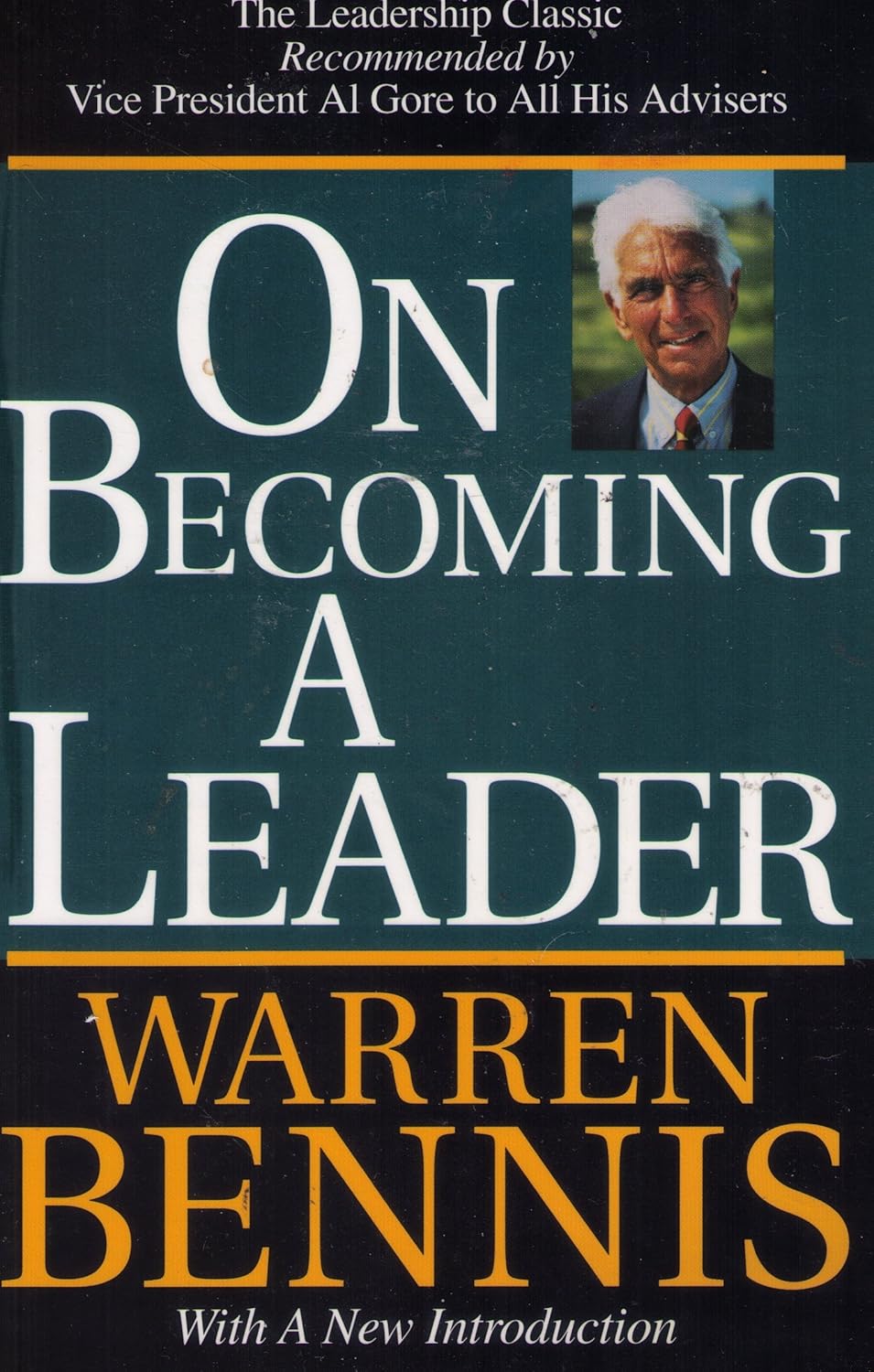
by Warren Bennis
Source book · ~5h read
Pairing
On Becoming a Leader is paired with the People stage — who builds it with you determines whether it gets built at all.
Working draft
This summary is an early draft, still being checked for accuracy against the source. Treat it as a work in progress — not a verified reference — until this notice is removed.
The argument
Warren Bennis, after decades of studying leaders, argues that leadership is not a set of techniques but a process of becoming yourself, fully and publicly. The leaders he studied weren't molded by formula — they were forged by self-discovery, by the ability to integrate experience into meaning, by knowing what they stood for and being unafraid to express it. Leadership = self-expression at its most disciplined and consequential.
At a glance
The hook
'Leader' is the role you walked into without learning it.
First-time founders are thrown into leadership without preparation. No one teaches you how to lead in the way they teach you to code or design or sell. The default is to imitate previous bosses or famous founders — both of which usually fail because leadership is irreducibly personal.
Bennis's contribution is reframing leadership development as self-development. The leader he describes isn't a polished archetype — it's someone who has done the hard work of knowing themselves, integrating their experience, and showing up authentically. For first-time founders, this is the difference between leadership that feels like performance and leadership that feels like identity. The performed kind exhausts you; the identity kind is sustainable.
5 takeaways
01 / 05 — Know thyself
Use ← → keys, or swipe on mobile
Take 60 quiet minutes. Answer in writing:
'What do I actually believe about how this company should operate, treat people, and engage the market?' Specific beliefs, not slogans. 'I believe customers should be told the truth even when it costs us a sale.' 'I believe team members should be given full ownership of decisions in their domain.' 'I believe slow hiring is better than fast firing.'
Write 10–15 such beliefs. They're you, not the company.
Now ask: which of these am I publicly committed to? Which have I quietly compromised on? The compromises are where leadership erodes, and the team senses it before you do.
Pick the most important compromise. Not the easiest one. The most important. Decide this week: do I publicly recommit to this belief, or do I name honestly that I no longer hold it?
Either path is leadership. The path of pretending to hold a belief while not living it is not.
Read
Share