Free as discount
- Promotional tactic
- Limited time / quantity
- Goal: convert to full price
- Margin = price minus cost
- Works in physical goods
Profits
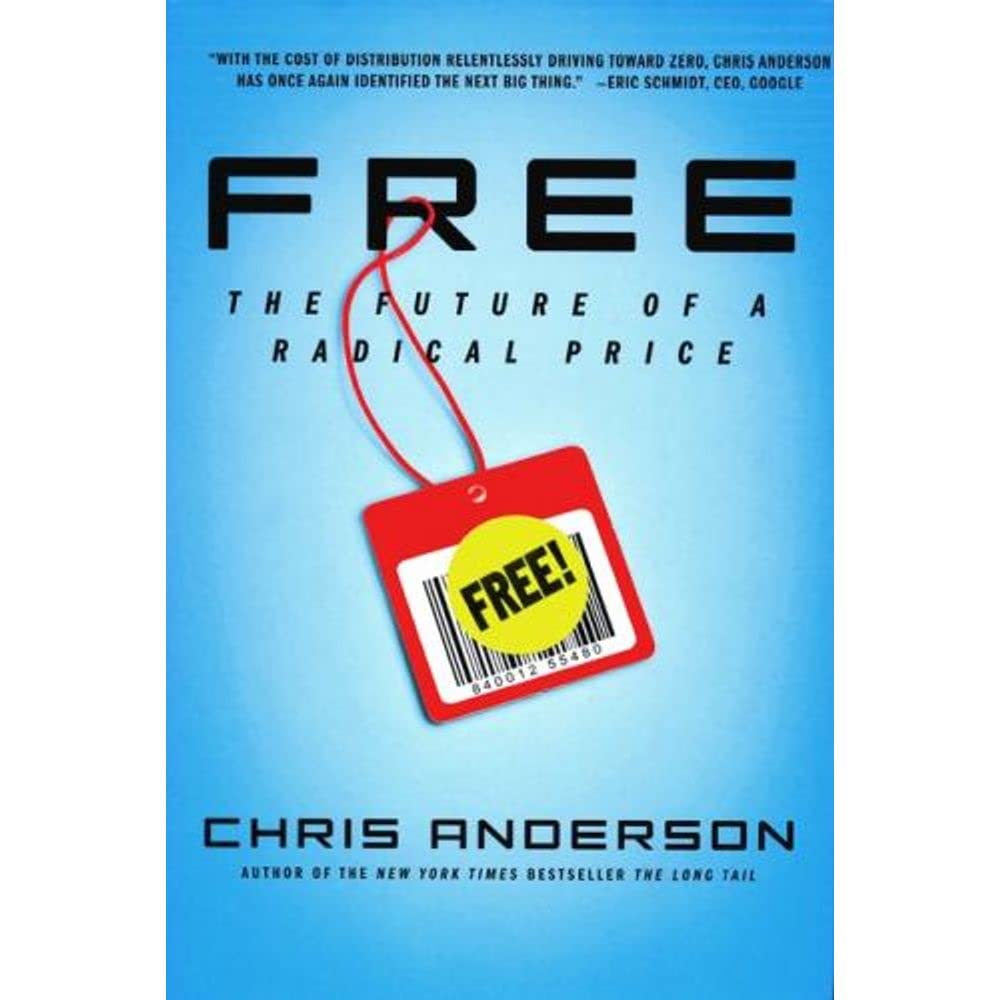
by Chris Anderson
Source book · ~4h read
Pairing
Free is paired with the Profits stage — from Purpose to Profits.
Working draft
This summary is an early draft, still being checked for accuracy against the source. Treat it as a work in progress — not a verified reference — until this notice is removed.
The argument
Chris Anderson argues that 'free' is no longer just a promotional tactic — it's a fundamental economic category in the digital age. When the marginal cost of distribution approaches zero (digital goods), pricing of zero becomes economically rational, not merely promotional. Free generates audience; audience converts to paid through specific business-model patterns: freemium, ad-supported, cross-subsidies, gift economy, and labor-as-payment. Founders who treat 'free' as a sales discount miss the strategic point: it's the new default, and the question is which paid model sits on top of it.
At a glance
The hook
'Free with upsell' feels like the answer — until you discover why it's also the trap.
First-time founders building digital products are constantly negotiating the free question. Should the first tier be free? How free? Free for how long? What converts? Anderson's contribution is naming the underlying economics. When marginal cost approaches zero, free is the default; the strategic question is which of five paid models layers on top.
The freemium model (small % of users pay; their payment subsidizes the rest) works only if conversion rates clear a bar — typically 1–5% — and the paid feature genuinely matters to that segment. Ad-supported models work only if the audience is large and advertiser-attractive. Cross-subsidies (give product A free, sell complementary product B) work when the lock-in is real. Each model has its own economics, its own risks, and its own kind of customer.
For first-time founders, the value is clarity about which free-then-paid model fits the venture. Picking the wrong one — running ad-supported when freemium would've worked, or freemium when the audience is too small to pay — is one of the more expensive early-stage mistakes, and it usually shows up 18 months in, when you can't pivot.
5 takeaways
01 / 05 — Marginal cost trends to zero
Use ← → keys, or swipe on mobile
Take your current digital product (or planned one). Answer four questions in writing:
1. What's the marginal cost of serving one more user? If it's not near-zero, free isn't your default — Anderson's logic doesn't fully apply.
2. Which of the five 'free' models fits?
Freemium — works if the paid feature is genuinely important to a small but identifiable segment.
Ad-supported — works if you can build very large audience and advertisers want to reach it.
Cross-subsidy — works if free product locks users into a paid one.
Gift economy — works if user contributions are the value (think Wikipedia).
Labor-as-payment — works if user effort produces value you can monetize (think Reddit moderators).
3. What's the realistic conversion rate, not the optimistic one? If freemium, what percentage of free users will pay, and at what price? Be honest. Most founders inflate this 5–10×.
4. What expectation does my offering set in the category? If I price too low or too free, am I creating a market that can't sustain my business? Or am I joining one that's already free-by-default?
The answers should converge on one model. If they don't, you don't have clarity yet — and pricing without clarity is one of the more expensive mistakes you'll make.
Read
Share