Carrots and sticks
- Extrinsic rewards / punishments
- Works for routine work
- Narrows attention
- Crowds out intrinsic motivation
- Performance gamed over time
Purpose
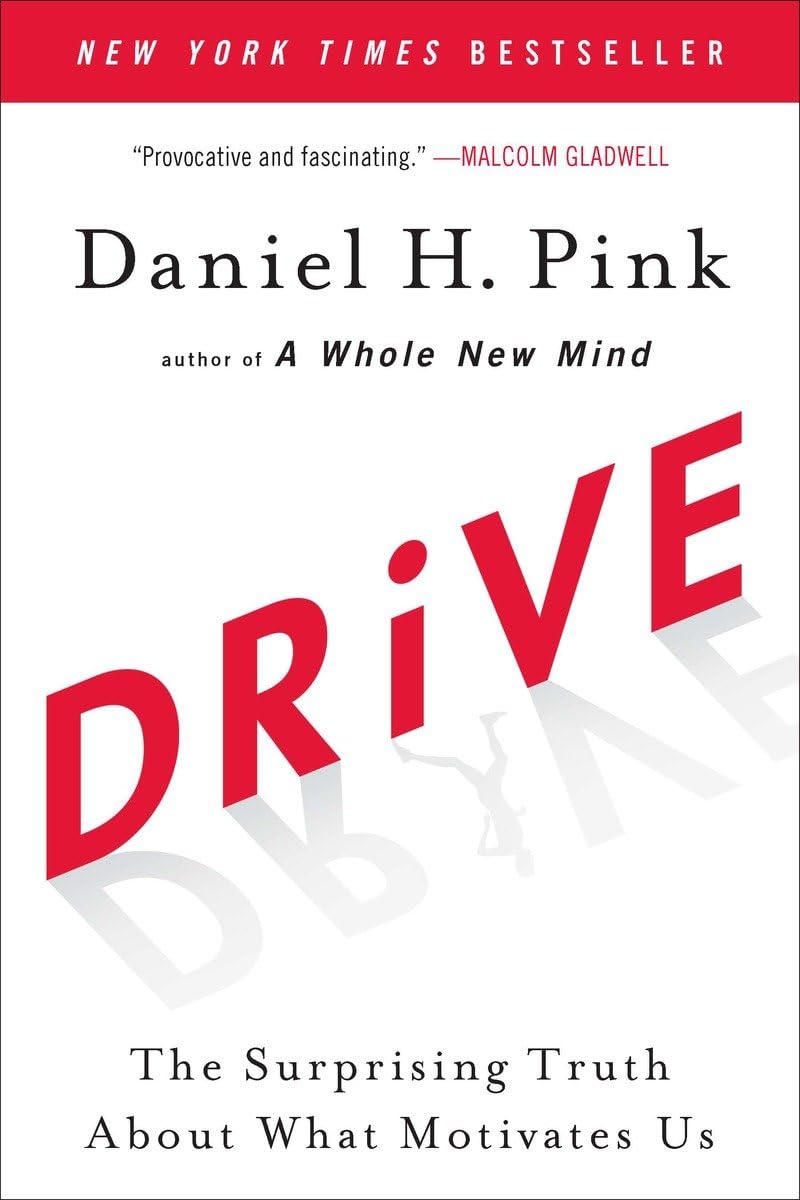
by Daniel Pink
Source book · ~4h read
Pairing
Drive is paired with the Purpose stage — the reason you start, and the reason you survive.
Working draft
This summary is an early draft, still being checked for accuracy against the source. Treat it as a work in progress — not a verified reference — until this notice is removed.
The argument
Daniel Pink argues that traditional carrots-and-sticks motivation works fine for routine work but actively damages performance on creative, complex, or open-ended work — the kind founders and their teams actually do. The science points to three ingredients of intrinsic motivation: autonomy (control over what, when, how, with whom), mastery (visible progress in something that matters), and purpose (connection to something larger than yourself). For creative work, contingent rewards can crowd these out — the more durable motivation is the intrinsic kind.
At a glance
The hook
Bonuses don't motivate creative work. They corrupt it.
Founders who came from corporate environments default to extrinsic motivation: equity grants, performance bonuses, OKR scoring. For routine work this works; for the creative, ambiguous, hypothesis-driven work that early-stage companies actually do, the same tools backfire. People game metrics, narrow scope to what's measured, and lose intrinsic engagement with the work.
Pink's contribution is permission to motivate differently. Autonomy — give people real ownership of decisions, not just tasks. Mastery — design jobs around visible learning, not just shipping. Purpose — connect daily work to the WHY (Sinek's territory). The reward isn't softer — it's structurally aligned with the kind of work that compounds. Founders who get this right hire and retain people they couldn't otherwise afford.
5 takeaways
01 / 05 — Type I vs Type X
Use ← → keys, or swipe on mobile
Take any role in your company — a co-founder's, a hire's, or your own. Score it honestly on three dimensions, 1–5:
Autonomy — does the person genuinely choose what they work on, when, how, and with whom? Or are most of those decided for them?
Mastery — is the work designed so they can see themselves getting better at something that matters? Or is it 'execute these tickets'?
Purpose — does the daily work obviously connect to a WHY worth caring about? Or does the why have to be re-explained to keep them engaged?
A total below 9 means you have a structural motivation problem the bonus structure can't fix.
For each dimension scoring 3 or below, identify one change you can make this month. Maybe autonomy = 'I'll stop pre-deciding the approach.' Maybe mastery = 'I'll commit to one feedback session per month with each role.' Maybe purpose = 'I'll re-state the WHY in our weekly meeting and tie one project to it.'
Small structural changes to autonomy, mastery, or purpose beat any incentive plan you can design.
Read
Share