Solution-led
- 'I have an idea'
- Build first, learn later
- Interview for confirmation
- Iterate the solution
- Problem assumed fixed
Pain · also: Product
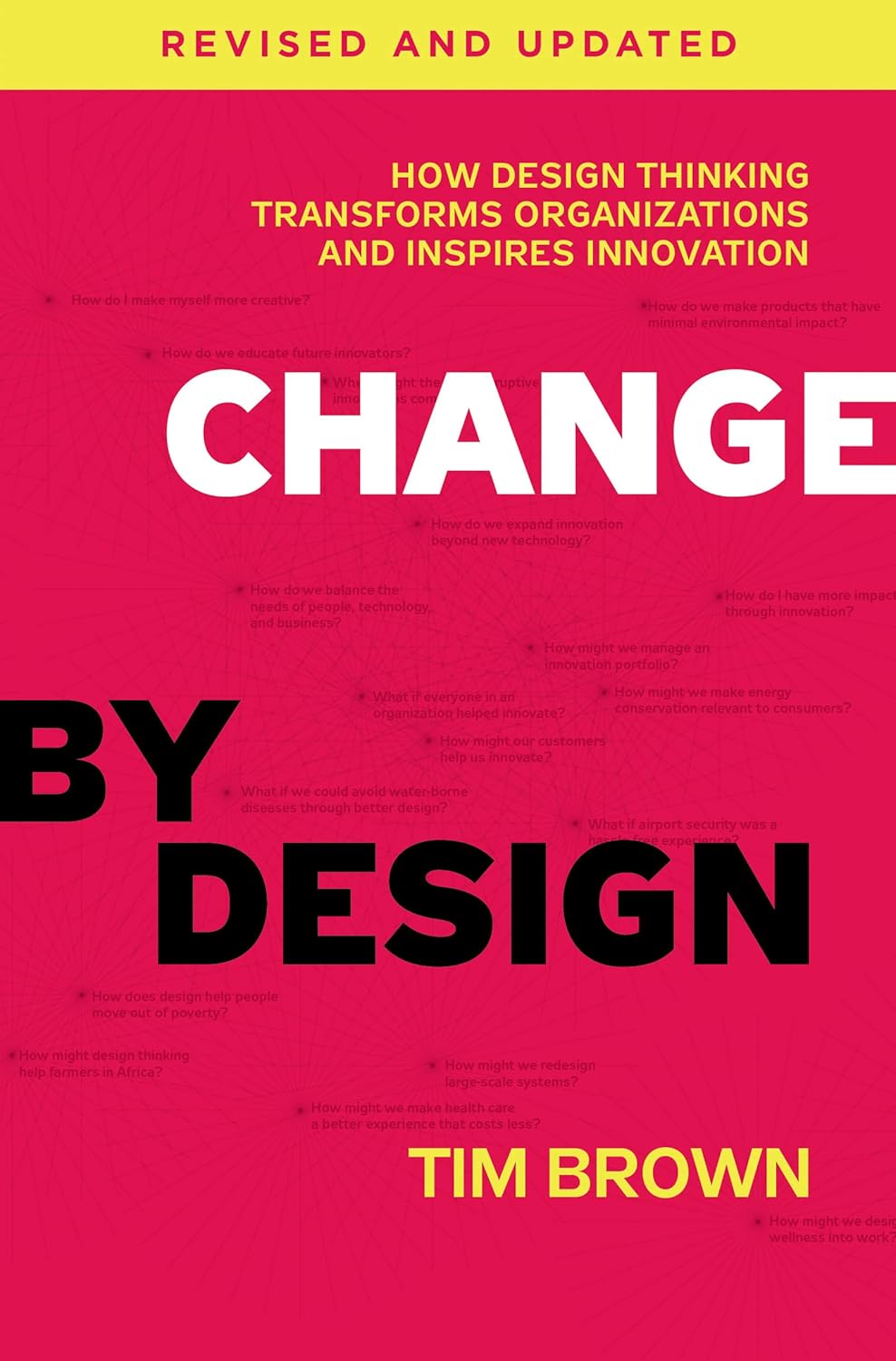
by Tim Brown
Source book · ~5h read
Pairing
Change by Design is paired with the Pain stage — fall in love with the problem, not the solution. It also speaks to Product.
Working draft
This summary is an early draft, still being checked for accuracy against the source. Treat it as a work in progress — not a verified reference — until this notice is removed.
The argument
Tim Brown, CEO of IDEO, argues that design thinking is not aesthetics — it's a method for solving complex problems through iterative empathy, ideation, and prototyping. The method has three overlapping phases: inspiration (understanding the problem and the people experiencing it), ideation (generating, testing, refining options), and implementation (the path to market). Design thinking treats the problem definition itself as iterative; most failed solutions were trying to solve a wrongly-defined problem.
At a glance
The hook
You keep shipping things that don't fit the people you built them for.
First-time founders default to solution-thinking: I have an idea, I build it, I ship it, customers should adopt it. *Brown's contribution is making problem-definition the gating phase*, not the throwaway start.
The inspiration phase — observation, immersion, empathy — is the part most founders skip or underdo. They think they understand the customer because they were the customer once, or because they read three forum threads. Real inspiration takes time, observation in context, and emotional engagement with the people you're designing for. Brown's argument is that the cost of skipping it is paid in failed launches, feature bloat, and roadmaps that chase competitor features instead of customer reality.
For first-time founders, the book reframes design as a thinking discipline, not a visual one. The visual stuff — the aesthetics — comes later, and is the easier part. *The harder part is being willing to revise the problem itself when the people you're designing for keep telling you, in words and behaviors, that you've named it wrong.*
5 takeaways
01 / 05 — Inspiration > ideation > implementation
Use ← → keys, or swipe on mobile
Pick the biggest assumption you're making about your customer — usually about who they are, what they want, or how they'd use your product.
Spend one hour this week observing the relevant context, not interviewing. In person if possible. Don't ask questions; watch.
For a B2B founder: sit in on a customer's actual workflow for an hour. Don't talk; observe.
For a consumer founder: watch real users in the use-context — at a coffee shop, in a store, at home — use the product (or its substitute) for an hour.
Take notes on what you didn't expect. Tensions. Workarounds. Side conversations. The things they did with their hands that they didn't mention in interviews.
End the hour with one question: 'what was I assuming about this person that turned out to be wrong?'
The answer reframes your problem. Most product breakthroughs are reframings, not solutions to the originally-stated problem. Brown's method, in 60 minutes.
Read
Share