The hand-wave
- B2B SaaS, $X/month
- We'll figure out distribution
- Some marketing, some sales
- Margins look good directionally
- Pivot felt right
Profits
by Alexander Osterwalder
Source book · ~5h read
Pairing
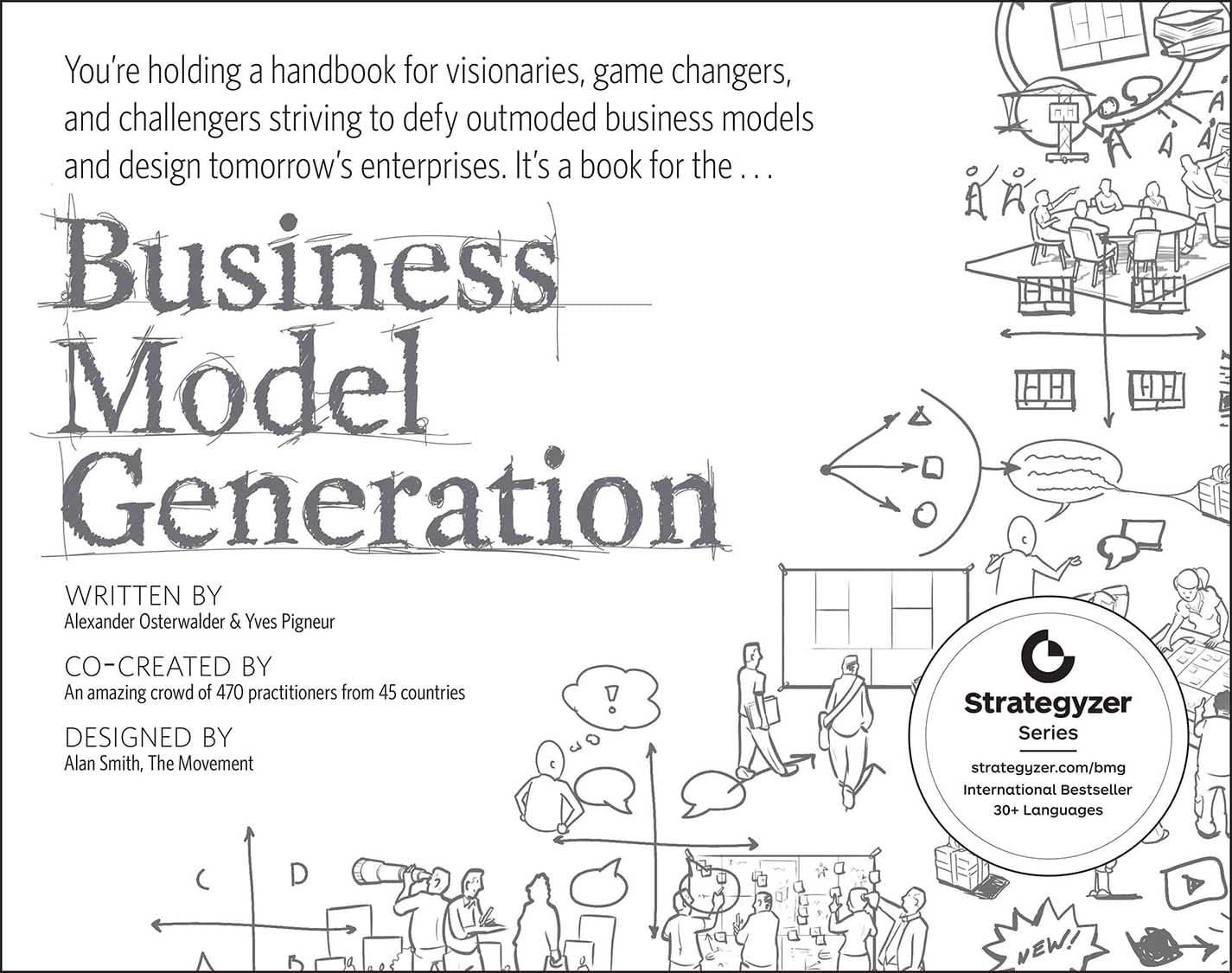
Business Model Generation is paired with the Profits stage — from Purpose to Profits.
Working draft
This summary is an early draft, still being checked for accuracy against the source. Treat it as a work in progress — not a verified reference — until this notice is removed.
The argument
Alexander Osterwalder argues that a business model is too important to keep in your head. The Business Model Canvas — nine boxes covering customer segments, value propositions, channels, customer relationships, revenue streams, key resources, key activities, key partnerships, and cost structure — externalizes the model so it can be tested, iterated, and challenged like any other artifact. The point isn't the canvas; the point is making the model concrete enough to falsify.
At a glance
The hook
The unit economics aren't vague. You just haven't written them down yet.
Most first-time founders have a product model and a vague business hope. They know how the product works; they're foggy on how the money works. When asked, they hand-wave: 'B2B SaaS, $X/month, we'll figure out the rest.' That hand-wave costs them when investors prod, when pricing decisions land, when distribution choices have to be made.
Osterwalder's contribution is making the model legible — to yourself, to your team, to your investors, to your future-self trying to remember why you priced this way. The canvas isn't a magic format; it's just a discipline. Every box has to be filled in. Every box has to connect to the others. When the connections don't make sense, you don't have a business; you have a product looking for one. Filling in the canvas is one of the cheapest ways to find out which one you have.
5 takeaways
01 / 05 — Nine boxes, one model
Use ← → keys, or swipe on mobile
Block 30 minutes. No interruptions. Print or sketch the Business Model Canvas (templates are widely available — strategyzer.com is the canonical source).
For each of the nine boxes, fill it in with the most specific, falsifiable language you can. Not 'small businesses' — 'US-based agencies with 10–50 employees doing client services.' Not 'monthly subscription' — '$199/month, billed annually with a 14-day trial.'
When the canvas is full, ask three questions:
1. Which box are you most uncertain about? That's your highest-priority experiment.
2. Which two boxes don't connect well? That's where the model is broken.
3. Which box is doing all the work? If the canvas only makes sense because of one heroic assumption, that's where it'll fail.
Update the canvas weekly until you've shipped. Then update monthly. The canvas is a living document — if you finish it once and never look at it again, you wasted the 30 minutes.
Read
Share